

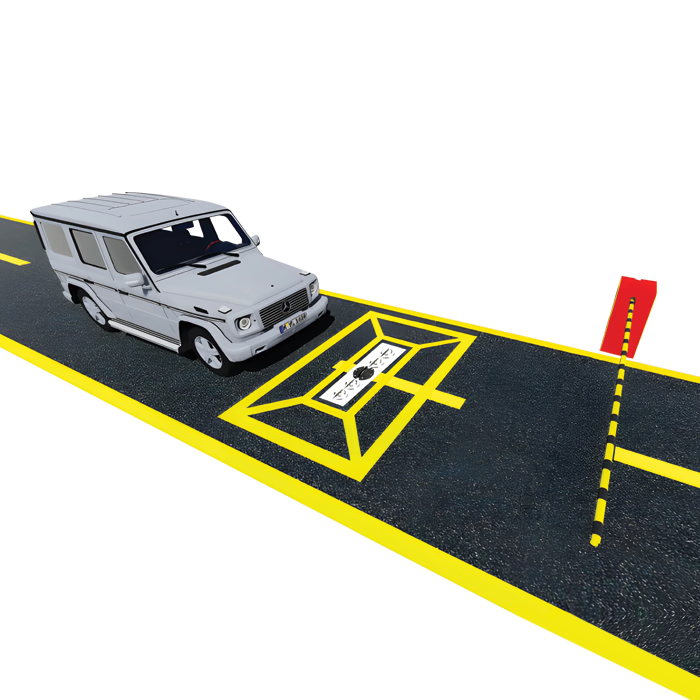

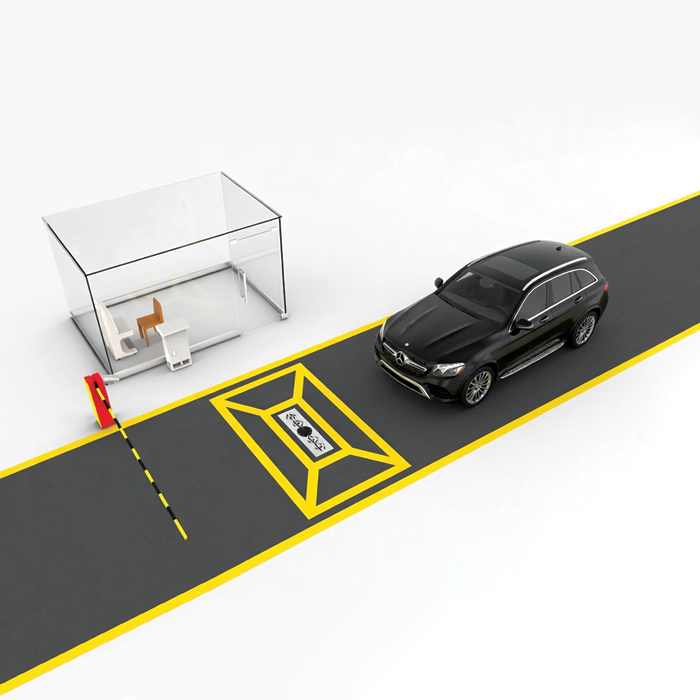
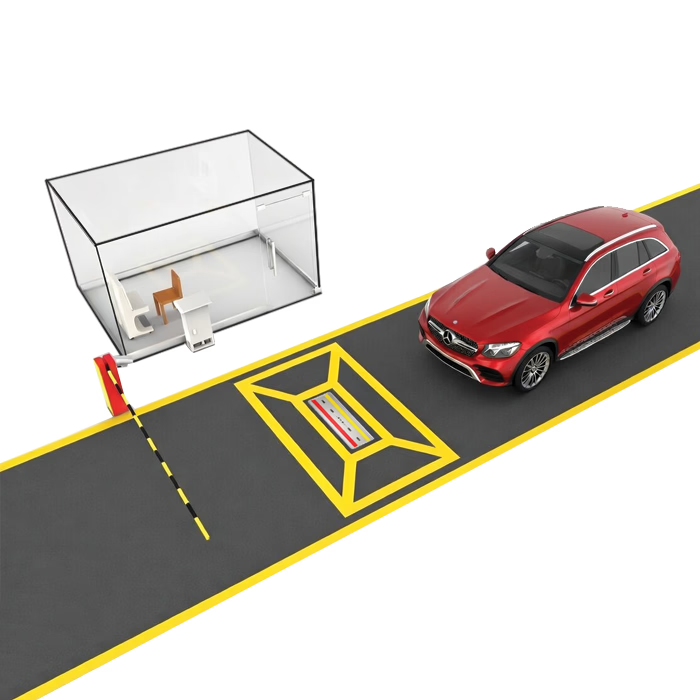
Fixed Type Under Vehicle Scanning System (UVSS)
Vehicle-based threats don’t always come from what’s visible. In high-security environments, contraband, explosives, weapons or unauthorized modifications can be hidden underneath vehicle areas that are difficult and unsafe to check manually. That’s why a Fixed Type Under Vehicle Scanning System (UVSS) has become a standard solution for secure entry points where vehicles must be screened fast, consistently and with digital evidence.
A fixed UVSS is installed permanently in the driveway or lane (often near a barrier gate), captures a high-resolution image of the undercarriage as the vehicle passes over, and displays the scan in real time for security officers to review. Many UVSS solutions use machine vision and industrial cameras (often line-scan) with strong LED lighting to create a complete underside image and maintain an inspection archive for search and comparison.
What is the Fixed Type (UVSS)?
A Fixed Type Under Vehicle Scanning System (UVSS) is a permanently installed vehicle inspection system that captures a detailed image of the vehicle’s undercarriage as it drives over a scanning module embedded in the lane. The system typically includes an under-vehicle scanning module, an industrial camera (line-scan or area-scan), dedicated LED lighting, a control PC/storage, and software for zooming, comparing, archiving, and alerting.
“Fixed type” meaning
“Fixed type” means:
- The scanner is installed permanently at a checkpoint lane (not portable).
- Scanning is usually automatic, triggered as a vehicle enters the inspection zone.
- It integrates easily with barrier gates, access control, ANPR (license plate recognition), traffic lights, and CCTV, creating a complete vehicle entry control workflow.
Why Fixed UVSS is Essential for Modern Vehicle Entry Security
Manual under-vehicle inspection is slow, inconsistent, and risky—especially at high-traffic entry points. A fixed UVSS improves security by enabling:
1) Fast undercarriage screening without stopping traffic
Many UVSS systems are designed to scan as the vehicle moves through the lane, minimizing bottlenecks and keeping checkpoints efficient.
2) Better detection of concealed threats and modifications
A UVSS helps security staff identify unusual objects, tampering, hidden compartments, hanging packages, or structural changes—using clear imaging and zoomable software views.
3) Digital documentation for audits and investigations
Unlike manual checks, UVSS creates a searchable database of undercarriage images (often paired with plate records when integrated with ANPR). This is important for compliance, incident review, and forensic evidence.
How a Fixed Type UVSS Works
A typical fixed UVSS lane works in a simple but powerful sequence:
-
Vehicle approaches the checkpoint
- A boom barrier or gate controls entry.
- A boom barrier or gate controls entry.
-
Automatic trigger starts scanning
- Many fixed UVSS designs use lane sensors (such as induction loops) to trigger image capture automatically as the vehicle passes over the scanner.
- Many fixed UVSS designs use lane sensors (such as induction loops) to trigger image capture automatically as the vehicle passes over the scanner.
-
High-resolution imaging of the undercarriage
- The scanner captures an underside image using industrial camera technology—often line-scan for building a stitched “full underbody” view.
- The scanner captures an underside image using industrial camera technology—often line-scan for building a stitched “full underbody” view.
-
LED lighting ensures clarity day/night
- Dedicated LED illumination supports consistent imaging in low light or night conditions.
- Dedicated LED illumination supports consistent imaging in low light or night conditions.
-
Operator reviews the scan
- The monitoring software allows zoom, pan, compare with previous visits, and archive images.
- The monitoring software allows zoom, pan, compare with previous visits, and archive images.
-
Decision + access control action
- If clear, the barrier opens; if suspicious, the vehicle is stopped for secondary inspection.
Fixed UVSS vs Portable UVSS
Buyers often compare fixed and portable solutions.
Fixed UVSS (best for permanent checkpoints)
- Always ready, 24/7 lane operation
- Higher stability and better integration with barriers and access control
- Best for: embassies, military, ports, industrial zones, corporate HQs, government facilities
Portable UVSS (best for temporary checkpoints)
- Deployed when needed
- Useful for events, temporary security operations, pop-up checkpoints
Some vendor materials explicitly describe UVSS product topologies with both fixed and portable options and note ANPR can be optional/standard depending on configuration.
Where Fixed Type UVSS is Used
Fixed under-vehicle scanning is commonly installed at:
- Government and military facilities
- Embassies and diplomatic zones
- Airports, seaports, land ports, border checkpoints
- Power plants, critical infrastructure, data centers
- Industrial zones, factories, warehouses
- High-security corporate campuses
- Prisons, courts, and police facilities
- VIP venues and large commercial sites
These are the locations where vehicle entry control is not optional—it’s part of daily risk management.
Core Components of a Fixed Type Under Vehicle Scanning System
A professional fixed UVSS solution typically includes:
1) Under-vehicle scanning module (in-lane)
The scanning unit is installed in the road surface. It must be:
- Rugged, sealed, and lane-safe
- Capable of handling heavy vehicles (in many deployments, heavy-duty construction is a key requirement).
2) Industrial camera system (line-scan or area-scan)
- Line-scan is commonly used for creating a complete stitched image as the vehicle moves.
- Area-scan systems also exist, and some solutions highlight color imaging and advanced camera configurations.
3) LED illumination
Lighting is essential to produce clear underbody images, especially at night.
4) Control PC / server + storage
UVSS systems store scans for:
- Evidence and compliance
- Repeat-visit comparisons
- Quick search and retrieval
Some UVSS solutions highlight building databases of undercarriage images and plate records.
5) Monitoring & analysis software
Typical functions include:
- Zoom, rotate, enhance
- Capture and archive
- Compare with reference images
- Vehicle entry/exit logs
Suppliers frequently list storage, retrieval, and comparison features as core UVSS capabilities.
6) Optional integrations
- ANPR / LPR camera integration (license plate logging and matching)
- Barrier gate / bollards / traffic lights
- Access control (RFID, biometric, visitor management)
- CCTV VMS integration and control-room dashboards
Key Features Buyers Look For in a Fixed UVSS
To rank and convert, your category page should clearly explain these buyer-intent features:
High-resolution undercarriage imaging
The purpose is to see fine details clearly—wires, packages, unusual attachments, and modifications.
Fast scan at checkpoint speeds
Many UVSS product listings emphasize scanning while the vehicle moves, with speed tolerance depending on model and setup.
Automatic triggering and hands-free operation
In fixed lanes, automated triggering reduces human error and speeds workflow.
Image archiving + search + compare
Being able to compare current scans with prior visits helps detect undercarriage changes over time.
ANPR and vehicle database reporting
When UVSS is tied to plate capture and entry logs, security teams gain stronger control and traceability.
Rugged fixed installation built for 24/7 operation
Fixed UVSS is expected to run continuously and withstand lane conditions (rain, dust, load, vibration). Some fixed systems emphasize continuous operation and industrial design.
How to Choose the Right Fixed UVSS for Your Facility
Step 1: Define the site risk and security policy
Ask:
- Is this a high-security site (embassy, military, port)?
- Do we need to detect contraband + hidden packages?
- Do we require logs and audit evidence?
High-security environments typically need stronger imaging, strict workflow control, and database-based tracking.
Step 2: Understand your vehicle mix and lane design
Consider:
- Sedans, SUVs, microbuses, trucks
- Ground clearance variations
- Lane width, turning radius, speed bumps
Installation manuals and specs often address lane widths and vehicle types/length constraints—because the lane design affects imaging success.
Step 3: Decide required throughput
If vehicles must pass quickly, prioritize:
- Reliable automatic triggering
- Fast processing and display
- Stable illumination and imaging
Step 4: Integration needs (most important for “fixed type”)
Fixed UVSS delivers maximum value when integrated with:
- Barrier gate
- Access control
- ANPR
- CCTV/VMS
- Central control room
Many professional fixed systems highlight integration with ANPR, traffic lights, barriers, and central control software.
Step 5: Service, spare parts, and maintenance support
A UVSS is mission-critical. Your buyers will ask:
- Warranty coverage
- On-site support
- Spare parts availability
- Software updates and training
Installation Best Practices for Fixed UVSS Lanes
A strong category page includes real-world installation guidance (this also increases buyer trust):
- Choose a controlled checkpoint zone (before the barrier gate)
- Keep the lane straight through the scan area where possible
- Use speed control (rumble strips or signage) for consistent scan quality
- Ensure proper drainage and sealing around the scanning module
- Provide a guard station with clear monitor view
- Plan a secondary inspection bay for vehicles flagged by UVSS
Fixed UVSS is most effective when the checkpoint design supports repeatable scanning conditions.
UVSS Workflow: A High-Conversion “Use Case Story”
A typical secure facility flow:
- Vehicle approaches → ANPR reads plate
- UVSS scans undercarriage automatically
- System displays underside image → operator checks suspicious areas
- If match + clean → barrier opens
- If anomaly → vehicle diverted to secondary bay, manual inspection performed
- Entry record stored for audit
This is exactly the kind of operational clarity procurement teams want.
Final Thought
A Fixed Type Under Vehicle Scanning System (UVSS) is one of the most effective security solutions for vehicle entry control where hidden threats beneath vehicles are a real risk. By capturing high-resolution undercarriage images automatically—often with lighting, software comparison, and integrations like ANPR and barriers—fixed UVSS transforms under-vehicle inspection from a slow manual task into a fast, consistent, evidence-driven security process.