
No posts found in this category.
IP Surveillance Camera
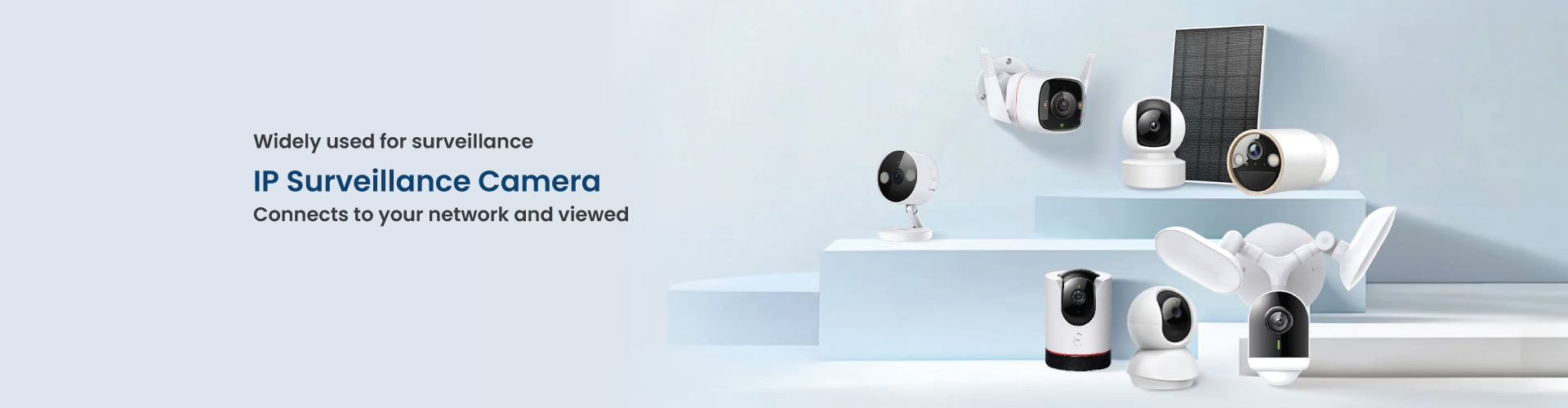
An IP Surveillance Camera (also called an IP camera or network camera) is the modern standard for video security in homes, offices, factories, retail stores, warehouses and large enterprise sites. Unlike older analog CCTV systems, IP cameras capture digital video and send it over an IP network (LAN/Wi-Fi), making it easier to manage multiple cameras, record in higher resolution, and monitor remotely through NVR/VMS or cloud platforms. IP cameras are widely used for surveillance because they transmit image data over an IP network and can record via an NVR or sometimes directly to storage.
What is an IP Surveillance Camera?
An IP Surveillance Camera is a digital video camera that sends video over an IP network (Ethernet or Wi-Fi). In simple terms, it works like a “smart” CCTV camera that connects to your network and can be viewed and managed through an NVR (Network Video Recorder), VMS (Video Management Software), or cloud service. Many IP cameras can operate with a central NVR, while some support decentralized recording to storage.
Why IP cameras are popular today
Buyers prefer IP surveillance cameras because they typically offer:
- Higher resolutions (clearer identification)
- Remote viewing from phone/PC (when configured securely)
- Flexible installation with PoE or Wi-Fi
- Easy integration with modern VMS/NVR systems
- Smart analytics (motion detection, human/vehicle detection, line crossing, etc.
How IP Surveillance Cameras Work
A typical IP surveillance setup follows this flow:
- Camera captures digital video
- Video is encoded (compressed) using standard codecs
- Video streams over the network (Ethernet/Wi-Fi)
- Recording happens on:
- NVR (most common for businesses)
- VMS server
- Cloud storage
- Sometimes edge storage (microSD)
- Monitoring & playback from a monitor, PC software or mobile app
For smoother installation, many IP cameras use Power over Ethernet (PoE)—one cable carries data + power. PoE standards define power levels such as IEEE 802.3af and 802.3at (PoE+).
IP Camera vs Analog CCTV: What Buyers Need to Know
Analog CCTV (traditional)
- Uses coaxial cable (DVR-based recording)
- Usually limited resolution and flexibility
- Fewer smart features and integrations
IP Surveillance Camera (modern)
- Uses network cables (Ethernet) or Wi-Fi
- Supports higher resolutions, analytics, and remote management
- Integrates with NVR/VMS and network infrastructure
For a product-category page, this comparison helps users self-select faster and boosts conversion.
Types of IP Surveillance Cameras
1) Dome IP Camera
- Clean indoor look, harder to see direction
- Common for offices, retail, receptions
2) Bullet IP Camera
- Visible deterrent, strong for outdoor walls and perimeter
- Common for gates, parking, warehouses
3) PTZ IP Camera (Pan-Tilt-Zoom)
- Remote movement and zoom control
- Used for large areas: campuses, yards, roads
4) Turret IP Camera
- Popular for crisp night vision and flexible angle
- Common for mixed indoor/outdoor setups
5) Fisheye / 360° IP Camera
- Covers wide area with one camera
- Useful for halls, lobbies, showrooms
Key Features of an IP Surveillance Camera
To rank for “IP Surveillance Camera”, your category page should explain these core buyer features clearly:
Resolution and image quality
Higher resolution helps identify faces, plates, and incidents. (Always recommend matching resolution with lens angle and distance.)
Night vision (IR) and low-light performance
Night visibility is one of the most common buying triggers—especially for parking, gates, and perimeter security.
Lens options
- Fixed lens (simple, cost-effective)
- Varifocal lens (adjust angle/zoom during installation)
- Motorized zoom (remote adjustment—model dependent)
WDR (Wide Dynamic Range)
Helps when there are bright and dark areas in the same scene (e.g., door entrances, gates with sunlight).
Audio and alarm I/O
Some cameras support microphones, speakers, and alarm inputs/outputs (useful for door sensors, sirens, or intercom-like warnings).
Storage options
- NVR recording (standard for multi-camera sites)
- Edge storage (microSD) for backup or standalone use
- Cloud recording (depends on vendor/service)
PoE support
PoE reduces wiring complexity and improves reliability. PoE standards define typical power delivery levels for devices like IP cameras.
ONVIF Compatibility: Why It Matters
Many buyers worry: “Will this camera work with my NVR?”
ONVIF (Open Network Video Interface Forum) is a widely used standard designed to help interoperability between IP-based security devices (like cameras, recorders, and VMS). ONVIF aims to provide a consistent interface so devices from different manufacturers can work together.
For example, ONVIF Profile S is designed for IP-based video systems and defines how a device (camera) streams video to a client (VMS/NVR).
ONVIF also organizes compatibility using profiles so buyers can understand which features are supported between devices and clients.
Category-page tip: Mention ONVIF support (Profile S/T where applicable) to reduce buyer anxiety and increase conversion.
Where IP Surveillance Cameras Are Used
IP camera systems are widely deployed in:
- Offices and corporate buildings
- Factories and industrial facilities
- Warehouses and logistics hubs
- Retail shops and shopping malls
- Residential buildings and apartments
- Schools, hospitals, and campuses
- Hotels, restaurants, and event venues
- Roads, parking areas, gates, and perimeter zones
This broad applicability is why “IP Surveillance Camera” is a high-volume keyword—buyers come from multiple industries.
How to Choose the Right IP Surveillance Camera
Step 1: Define your goal
- Face identification at entry?
- Perimeter coverage for intrusion detection?
- License plate visibility at gate?
- Staff monitoring and safety compliance?
Step 2: Select camera type based on location
- Outdoor perimeter: bullet/turret + strong night vision
- Indoor halls: dome/fisheye
- Wide areas: PTZ (optional)
Step 3: Choose the right resolution + lens angle
High resolution is useless if the angle is too wide and subjects become tiny. Match camera angle to the distance and target.
Step 4: Decide recording method
- NVR (best for multi-camera business use)
- Cloud (easy remote access, subscription-based)
- Edge storage (backup or small installations)
Step 5: Confirm PoE and network infrastructure
If you’re using PoE:
- Ensure your PoE switch supports your camera power class (802.3af vs 802.3at for higher-power models).
Step 6: Require interoperability when mixing brands
If you may mix brands, prioritize ONVIF-conformant cameras and confirm the required profile compatibility with your VMS/NVR.
Installation Checklist for a Professional IP Camera System
A strong product-category page can include a simple checklist (buyers love this):
- Site survey (lighting, distance, blind spots)
- Camera placement plan (entry, cash area, perimeter, parking)
- PoE switch sizing and cable quality (Cat6 preferred for stability)
- NVR channel count planning (future expansion)
- Storage calculation (days of retention, resolution, frame rate)
- UPS backup for NVR + network switch
- Proper camera mounting height and angle
- Secure remote access (VPN or secured method—avoid unsafe defaults)
Cybersecurity and Privacy Best Practices
Because IP cameras are network-connected, cybersecurity matters.
A practical way to frame it:
- Treat the camera system like an IT system (accounts, updates, network segmentation).
- Use strong passwords, unique credentials, and role-based access.
- Keep firmware and NVR/VMS updated.
- Isolate surveillance devices on a dedicated VLAN where possible.
- Control who can export footage, and define retention policies.
NIST provides cybersecurity guidance and frameworks used broadly to manage cyber and privacy risk across systems.
NIST’s SP 800-53 control family also discusses video surveillance in the context of security controls and notes that legal considerations can apply, especially in public locations.
Final Thought
An IP Surveillance Camera is the smart foundation for modern video security—offering digital clarity, flexible installation, and scalable management compared to legacy analog systems. With the right camera type, lens, night vision, and PoE/network planning, businesses can build a reliable surveillance system that improves safety, reduces risk and supports incident investigation.
For best results, choose cameras with dependable recording options, consider ONVIF compatibility when mixing brands, and treat cybersecurity as part of the installation—not an afterthought.