

Swing Barrier Gate
Modern facilities need more than guards and manual checking to manage entry. Whether you operate a corporate office, hospital, university, factory, government building, or a large commercial space, you need a system that can control pedestrian access smoothly, safely, and professionally. That is why the Swing Barrier Gate has become one of the most practical and widely used entrance control solutions.
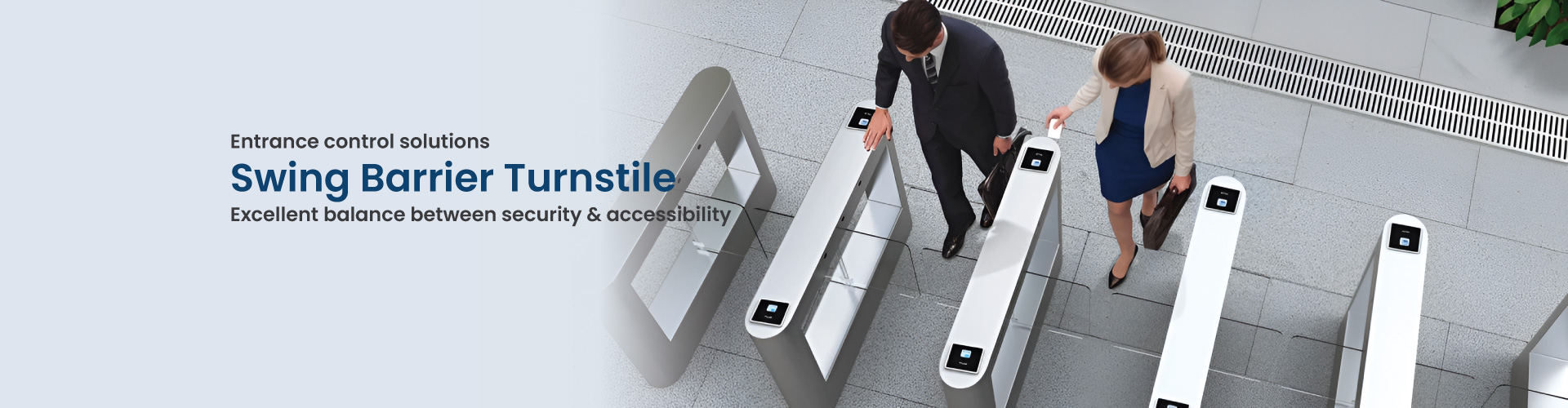
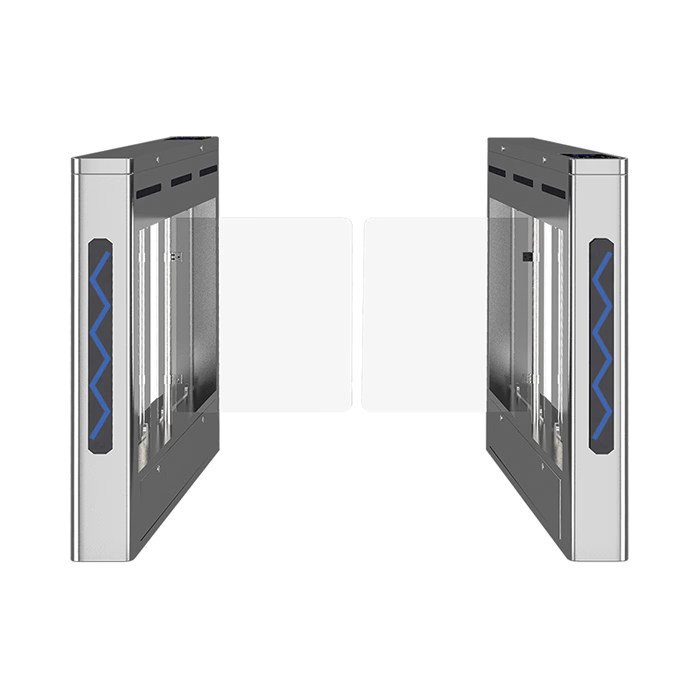
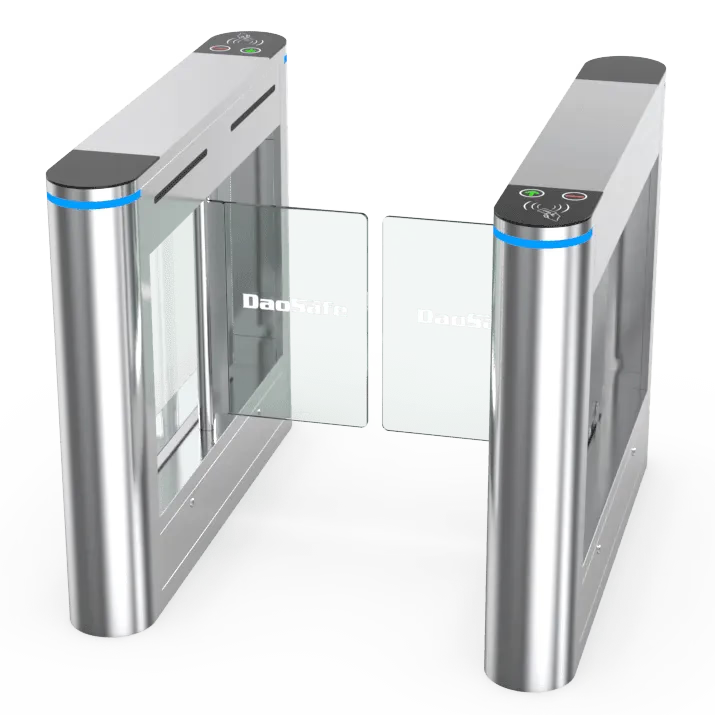
A swing barrier gate is designed to create an intelligent access lane using one or two swinging arms (barriers) that open after valid authorization. It offers an excellent balance between security, speed, comfort and accessibility—especially in places where wheelchairs, trolleys, stretchers, or large foot traffic must move through without difficulty.
What is the Swing Barrier Gate?
A Swing Barrier Gate is an automatic pedestrian access gate that opens and closes using a swinging arm (or panel) to allow authorized people to pass through. The barrier typically swings inward or outward like a door. Once a user is verified through an access control system, the barrier opens for a short time, then closes automatically after the person passes.
Unlike tripod turnstiles that use rotating arms, a swing barrier gate provides a more comfortable and accessible passage. This makes it ideal for environments where people may carry bags, push trolleys, use wheelchairs, or require a wider lane.
How a Swing Barrier Gate Works
- A person approaches the gate lane
- Presence sensors detect the user
- The user authenticates (RFID, fingerprint, face, QR, etc.)
- The controller confirms authorization
- The barrier arm swings open smoothly
- The person passes through
- The barrier closes automatically and locks again
Many systems also support alarms and logic rules to detect unauthorized entry, wrong direction movement, or tailgating depending on sensor configuration.
Why Swing Barrier Gate is a Smart Choice
Swing barrier gates are popular because they combine security + user comfort. Here are the top reasons organizations choose them:
1) Smooth and Comfortable Entry
Swing barriers open gently and allow natural walking flow. This is great for premium buildings, hospitals, and offices where a harsh mechanical entry experience is not desired.
2) Wide Lane and Accessibility Friendly
A swing barrier lane can be configured wider than standard turnstiles, making it suitable for:
- Wheelchair access
- Baby strollers
- Hospital stretchers
- Trolleys and carts
- Visitors with luggage
3) Strong Access Control Integration
Swing barrier gates can integrate with:
- RFID card readers
- Fingerprint attendance devices
- Face recognition terminals
- QR code scanners
- Visitor management systems (VMS)
- Elevator access control (advanced projects)
- Time attendance and HR software
4) Better Lobby Aesthetics
Swing barriers often feature sleek cabinets made from stainless steel and can be paired with acrylic or glass panels, creating a modern and professional look.
5) Controlled Entry with Safety Sensors
Infrared sensors help ensure the barrier does not close on a user. Systems can detect obstruction and keep the lane safe.
Where Swing Barrier Gates are Used
Swing barrier gates are used anywhere that needs controlled entry and a friendly movement experience:
Corporate Offices & Business Centers
- Employee access control
- Visitor discipline in reception area
- Modern lobby security
Hospitals & Diagnostic Centers
- Smooth movement for patients
- Stretcher and wheelchair friendly lanes
- Controlled access to restricted departments
Universities & Educational Institutes
- Student and staff access control
- Controlled entry to libraries, labs, hostels
- Visitor and event management
Government Offices & Sensitive Zones
- Restricted entry areas
- Visitor logs and controlled movement
- Integration with biometrics for higher security
Commercial Buildings, Shopping Complexes & Gyms
- Membership and staff access
- Visitor flow management
- Premium entry experience
Transport Terminals & Large Facilities
- Entry discipline for crowds
- Ticketing/QR integration for lane access
- Multiple lanes for high traffic
Types of Swing Barrier Gate
Swing barriers are available in different types depending on site needs:
1) Single Arm Swing Barrier
- One swinging arm controls the lane
- Ideal for standard entry lanes
- Common in offices and small facilities
2) Double Arm Swing Barrier
- Two arms meet in the middle for stronger blocking
- Better for higher control and premium entry points
3) Motorized Swing Barrier Gate
- Fully automatic and smooth
- Suitable for high traffic environments
- Faster response and consistent movement
4) Semi-Automatic Swing Barrier
- Economical option
- Works with access control but may have simpler motor systems
5) Swing Speed Gate (Premium)
- Faster opening/closing cycle
- Sleek cabinet design
- High-end corporate and enterprise projects
6) Wide Lane Swing Barrier
- Designed for wheelchair and trolley movement
- Often installed as a dedicated accessible lane beside standard lanes
Key Features to Look For Before Buying
If you want the best performance and long service life, focus on these features:
Build Quality & Materials
- Stainless steel body for durability and anti-rust performance
- Solid base plate and stable cabinet structure
- Smooth finishing for premium indoor environments
Motor Performance
- Quiet motor with stable swing movement
- Adjustable opening speed (useful for safety and traffic)
- Long cycle life for heavy daily use
Sensors & Safety System
- Multi-beam IR sensors for detecting people and obstacles
- Anti-pinch protection
- Obstruction detection (keeps arm open if blocked)
Access Control Compatibility
- Support for dry contact/relay input (common)
- Compatibility with Wiegand/TCP/IP/RS485 devices (depending on system)
- Easy integration with third-party controllers and readers
Security Functions
- Wrong-direction detection and alarm
- Tailgating detection (depends on sensor configuration)
- Emergency open mode during fire alarm (optional integration)
Power Stability Support
In Bangladesh, power stability matters. Look for:
- UPS compatibility for uninterrupted operation
- Surge protection recommendation for longevity
Swing Barrier Gate vs Flap Barrier Gate vs Tripod Turnstile
Swing Barrier Gate
- Best for accessibility and comfort
- Great for wheelchair/trolley/stretcher movement
- Premium indoor use
Flap Barrier Gate
- Faster throughput and premium look
- Retractable flaps, very modern
- Ideal for office lobbies and stations
Tripod Turnstile
- Budget-friendly and strong basic control
- Rotating arms
- Good for factories and basic entry points
If your facility requires wide lanes and smooth movement, the swing barrier gate is usually the best choice.
How to Choose the Right Swing Barrier Gate
Use this practical checklist:
1) Traffic Volume
- Low to medium: standard motorized swing barrier
- High peak: speed gate version or multiple lanes
2) Lane Requirement
- Standard lane for regular users
- Wide lane for wheelchair/trolley/stretcher
3) Security Level
- Standard access: RFID + basic sensors
- Higher security: face/fingerprint + alarms + stricter logic rules
4) Environment Type
Swing barriers are mainly indoor. If semi-outdoor:
- Provide canopy/roofing
- Ensure protected placement and quality finishing
5) Support & Maintenance
Choose a supplier who provides:
- Site survey and lane planning
- Proper installation and wiring
- Integration and software configuration
- After-sales service and spare parts
Common Problems and Solutions
Problem: Barrier hits users or feels unsafe
Solution: Increase sensor coverage, reduce swing speed, enable obstruction detection.
Problem: Unauthorized entry attempts
Solution: Activate alarm output, improve sensor calibration, use stricter access rules.
Problem: Slow entry during rush hours
Solution: Add additional lanes or use faster readers and speed gate models.
Problem: Power failure stops operation
Solution: Use UPS backup and proper surge protection.
Final Thought
A Swing Barrier Gate is one of the best entrance control solutions for organizations that need secure access with smooth, comfortable movement. It is especially valuable for facilities that require wide-lane access—such as hospitals, corporate buildings, universities, and modern commercial spaces.
By integrating swing barrier gates with RFID, fingerprint, face recognition, QR access, and visitor management systems, you can build a professional, automated, and secure entry environment that improves both security and user experience.