
Car Parking Guidance
Finding a free parking space should not feel like a daily challenge. In busy cities, commercial buildings, hospitals, airports and shopping malls, drivers often waste valuable time circling around, creating congestion, frustration and unnecessary fuel costs. This is exactly where Car Parking Guidance becomes a game-changer.
A Car Parking Guidance System (PGS) is designed to guide drivers to available parking spaces quickly using real-time sensors, smart indicators, and digital signage. Instead of guessing which floor or lane has free bays, drivers get instant direction—reducing traffic inside the parking area, improving safety, and increasing overall parking efficiency.
For property owners and facility managers, Car Parking Guidance is not just a “nice-to-have” feature. It improves customer satisfaction, maximizes utilization, helps manage peak-hour pressure, supports security operations, and provides data for smarter decision-making. Whether you manage a multi-level basement car park, a large outdoor parking lot, or a mixed-use building with reserved and public zones, a modern parking guidance solution can transform operations and increase the value of your facility.
What is Car Parking Guidance?
Car Parking Guidance is a smart parking management solution that detects occupancy of parking bays in real time and guides drivers to available spaces using visual indicators (like LED signs and bay lights) and sometimes mobile apps.
A typical parking guidance setup works like this:
- Sensors detect whether a parking bay is free or occupied.
- The system updates occupancy status instantly in the control software.
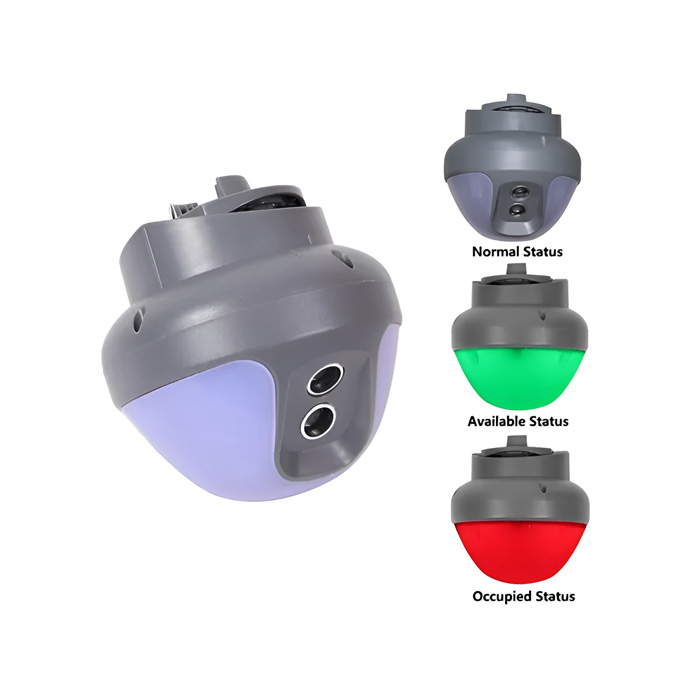
- LED indicators above each bay show green/red (available/occupied).
- Directional signs at entry points, ramps, and junctions show where free spaces are located.
- Operators can monitor the entire car park through a dashboard, and reports can be generated for planning and optimization.
In simple terms: it removes confusion and makes parking faster, smoother, and more organized.
Why Car Parking Guidance in Modern Parking Facilities
1) Faster Parking, Better Experience
Drivers reach available bays quickly, reducing stress and making the facility feel premium and well-managed.
2) Less Internal Traffic & Congestion
Less circling means fewer vehicles blocking lanes, ramps, and turning points—especially critical during peak hours.
3) Reduced Fuel Waste and Emissions
When cars spend less time searching, fuel consumption and emissions go down.
4) Higher Space Utilization
Real-time visibility improves bay turnover and ensures zones are used efficiently.
5) Improved Safety
A calmer, less congested parking environment reduces risk of collisions and pedestrian incidents.
6) Data-Driven Parking Management
Operators can track occupancy trends by hour/day/season, optimize staffing, and plan capacity expansions smartly.
Core Components of a Car Parking Guidance System
Parking Bay Sensors (Occupancy Detection)
These are the “eyes” of the system. Common options include:
- Ultrasonic sensors (often ceiling-mounted in indoor parking)
- Camera-based detection (video analytics)
- Magnetic/ground sensors (often for outdoor parking)
- Radar/IoT sensors (reliable detection in varied conditions)
Bay Indicator Lights (Red/Green LEDs)
Installed above each bay or integrated into sensors:
- Green: Available
- Red: Occupied
- Optional colors: Blue (reserved), Yellow (disabled/EV/priority), Purple (staff/VIP)
Zone Displays / Aisle Signs
At the start of each lane/zone:
- Shows how many spaces are free in that lane or direction.
Entry & Floor-Level Variable Message Signs (VMS)
At entrances, ramps, and junctions:
- Displays free space count per floor/zone.
- Guides traffic to the best route.
Control Software & Dashboard
A centralized platform for:
- Live occupancy view (per floor, zone, bay)
- Alerts and device health monitoring
- User permissions
- Reports (peak hours, average search time, utilization, trends)
Networking & Power Infrastructure
- Controllers, gateways, PoE switches (where applicable)
- Wired/Wireless communication (RS485, CAN, Ethernet, Wi-Fi, LoRa, etc.)
Types of Car Parking Guidance Solutions
1) Indoor Parking Guidance
Best for malls, hospitals, offices, hotels, airports:
- Ceiling-mounted sensors + LED indicators
- Zone signage and floor-level VMS
2) Outdoor Parking Guidance
Used in stadiums, campuses, industrial areas:
- Ground sensors or camera-based detection
- Outdoor-rated displays and solar options (in some setups)
3) Camera-Based Parking Guidance
Ideal when you want fewer per-bay hardware units:
- Uses cameras covering multiple bays
- AI analytics determines occupancy and events
- Useful for security integration and incident review
4) Hybrid Systems
Combination of sensors + cameras:
- Great for complex facilities with mixed indoor/outdoor zones.
Key Features to Include in a High-Quality System
- Real-time occupancy detection (fast refresh rate)
- Accurate guidance signage (clear direction at every junction)
- Zone-based allocation (VIP, staff, disabled, EV charging, reserved)
- Fault monitoring & alerts (sensor offline, communication failure)
- User-friendly dashboard (easy training and daily operation)
- Reports & analytics (utilization trends, heatmaps, KPIs)
- Integration support (access control, ANPR, payment systems, CCTV)
- Scalability (expand floors/zones without rebuilding everything)
Where Car Parking Guidance is Commonly Used
- Shopping malls & retail complexes
- Airports, train stations, terminals
- Hospitals & diagnostic centers
- Corporate offices & business parks
- Hotels & resorts
- Universities & campuses
- Residential complexes
- Government buildings
- Stadiums & event venues
- Industrial sites & factories
Car Parking Guidance vs Traditional Parking Signage
Traditional parking signs are static. They cannot tell drivers where free spaces are right now. A guidance system:
- Updates instantly based on occupancy
- Reduces time-to-park
- Improves traffic flow
- Provides control and data
This is why smart buildings increasingly consider parking guidance as part of a complete “smart facility” ecosystem.
Installation Overview: How It’s Deployed
A standard implementation typically includes:
- Site survey & zoning plan: Define floors, lanes, bay numbering, reserved zones, entry/exit flow.
- Hardware placement design: Sensor points, signage positions, cable routing, network design.
- Installation & configuration: Sensors mounted, signs installed, controllers connected.
- Software mapping: Bay mapping, zone setup, signage messages, admin roles.
- Testing & calibration: Validate accuracy, failover behavior, signage routing, reporting.
- Training & handover: Operator training, maintenance guidance, SLA documentation.
Maintenance & Reliability Tips
To keep the system stable long-term:
- Use industrial-grade devices (heat, dust, humidity tolerance)
- Ensure clean cabling and proper controller placement
- Keep firmware/software updated
- Schedule periodic checks for sensors and signage visibility
- Maintain logs and alerts for proactive support
How to Choose the Right Parking Guidance System
Consider these practical points before purchasing:
- Total bays and floors: choose a scalable architecture
- Indoor or outdoor: sensor type must match environment
- Accuracy requirements: high-traffic areas need reliable detection
- Signage needs: entry VMS + junction signage + zone displays
- Special zones: VIP, staff, EV, disabled, reserved bays
- Integration requirements: payment, ANPR, access control, CCTV
- After-sales support: warranty, spares, remote support availability
Final Thought
A Car Parking Guidance System is one of the most effective upgrades for modern parking facilities. It reduces the time drivers spend searching for bays, minimizes congestion inside the car park, improves safety, and gives facility owners complete visibility and control. Beyond convenience, it delivers measurable operational benefits—better utilization, smoother traffic flow, and data that helps you manage parking intelligently.
If your goal is to provide a premium experience, optimize operations, and future-proof your parking infrastructure, Car Parking Guidance is a smart investment that pays back in both customer satisfaction and operational performance.