
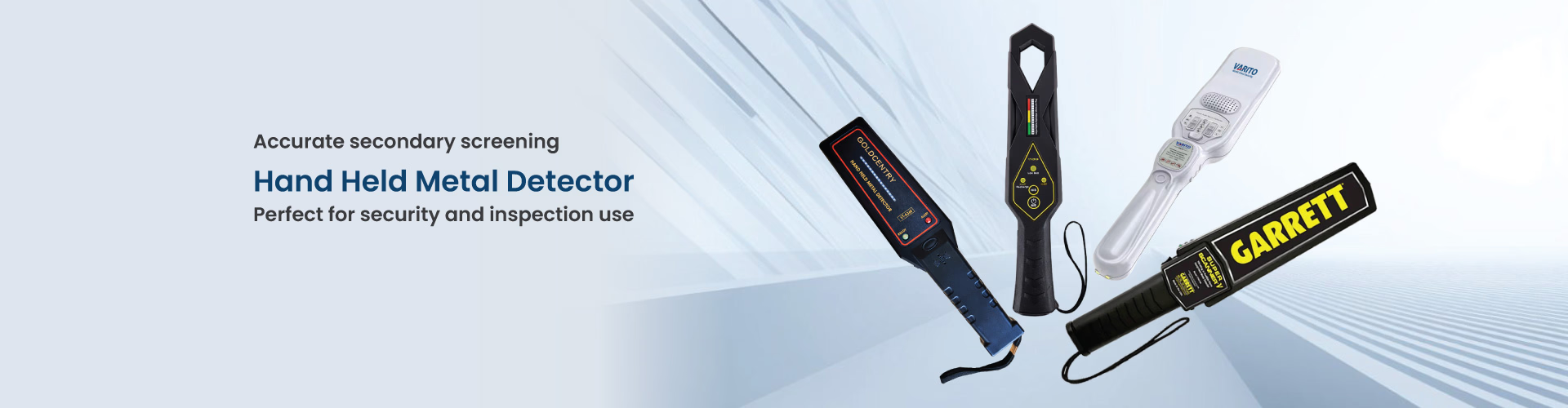
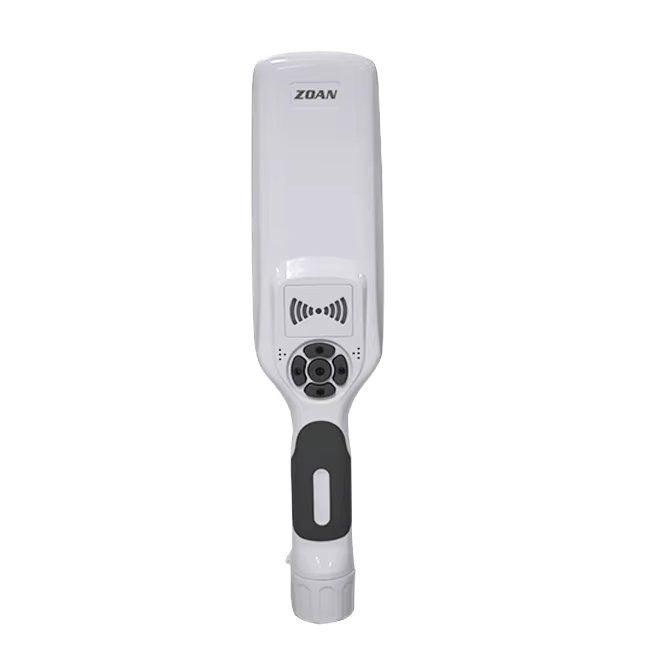
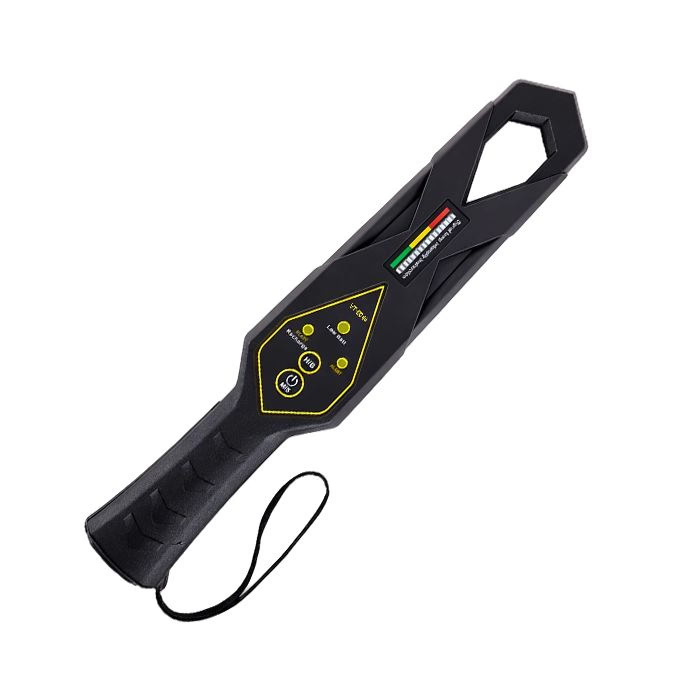
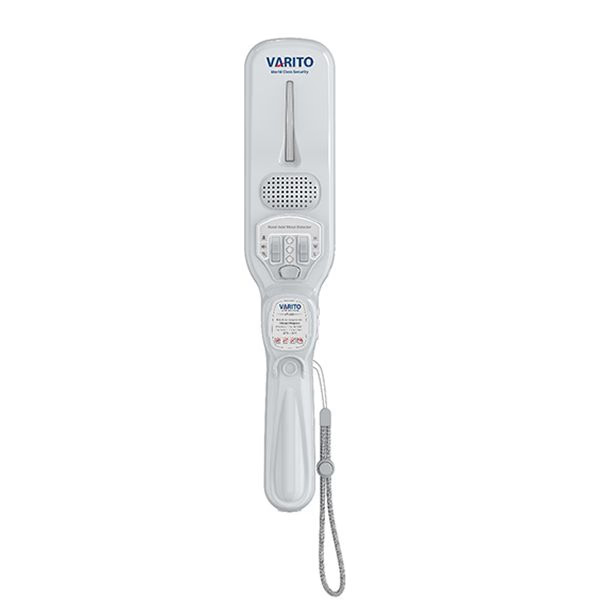
Hand Held Metal Detector
A Hand Held Metal Detector is one of the most practical tools for fast, accurate secondary screening at entrances. When a walk-through gate alarms or when your security team needs a quick spot-check—this compact device helps locate concealed metal objects on a person or along the surface of bags and packages without slowing down crowd flow.
For airports, railway/metro stations, government buildings, courts, factories, corporate offices, schools, hospitals, events, and VIP entrances, handheld metal detectors are popular because they are portable, affordable, easy to train, and effective when used with proper procedures. Many manufacturers describe handheld units as working by generating a magnetic field and alerting the operator when metal disrupts it.
What is a Hand Held Metal Detector?
A Hand Held Metal Detector is a compact electronic device used by security personnel to detect metal objects. The operator moves the detector close to a person’s clothing (or near a bag) and the unit alerts with beep, vibration, and/or LED light when it senses metal above a set threshold. This makes it ideal for:
- Secondary screening after a walk-through detector alarm
- Targeted scanning (pockets, waist, shoes, sleeves, bags)
- Mobile security checks where a gate is not practical (temporary events, remote checkpoints)
The National Institute of Justice (NIJ) in the U.S. has published specific performance standards for hand-held detectors used for concealed weapon and contraband detection, highlighting how widely these devices are used in professional screening programs.
How a Hand Held Metal Detector Works
Most modern handheld wands work using electromagnetic detection:
- Transmitter coil creates an electromagnetic field
- Receiver coil senses changes when metal disturbs that field
- Signal processing decides whether the detected disturbance is strong enough to trigger an alarm
- Alerts are provided via sound, vibration, and lights
Manufacturers commonly explain handheld detectors as operating with a magnetic field that detects metal presence and triggers an alert when metal disrupts the field.
What kinds of metal can it detect?
Most security wands detect common metals including ferrous and non-ferrous items (capability varies by model, settings, and target size). Professional product documentation often describes sensitivity to various metals including stainless steel.
Where Hand Held Metal Detectors Are Used
A strong category page should clearly list real-world use cases because buyers search by location/industry:
- Airports & transport hubs: secondary screening after WTMD alarms, staff entry checks
- Railway/metro stations: quick checks during rush hours
- Government buildings, courts, embassies: controlled entry for visitors and staff
- Factories and warehouses: theft prevention and safety screening
- Shopping malls & commercial buildings: visible security for public confidence
- Events, stadiums, concerts: mobile lanes, VIP checks, temporary gates
- Schools and hospitals: controlled access during sensitive periods
In many security workflows, handheld detectors are positioned as follow-up tools to pinpoint the alarm source after a walk-through gate or for low-traffic entrances where a full gate is unnecessary.
Key Benefits of a Hand Held Metal Detector
1) Faster secondary screening
Instead of searching randomly, guards can quickly narrow down the alarm location—waistband, pockets, ankles, shoes—then request removal of the item or proceed with policy-based inspection.
2) Portable security for flexible operations
A handheld detector can move between entrances, be carried by patrol teams, or deployed instantly at temporary checkpoints.
3) Cost-effective upgrade to any checkpoint
Compared to large walk-through gates, handheld units are typically lower-cost and easier to maintain especially useful for organizations building layered security step-by-step.
4) Better visitor experience when used correctly
When operators follow a clear scanning procedure (consistent distance, methodical sweep), visitors feel the process is professional not arbitrary.
Hand Held Metal Detector vs Walk Through Metal Detector
These are not competitors they’re partners:
- Walk-through metal detector: screens everyone quickly, triggers alarms
- Handheld metal detector: finds the exact location after an alarm (or spot-checks)
Many organizations deploy both because this combination gives high throughput + precise pinpointing without excessive manual searching.
Core Features of Hand Held Metal Detector
1) Alarm modes: sound, vibration, LED
- Sound is great in normal environments
- Vibration is essential in noisy areas (events, streets, factories)
- LED helps supervisors visually monitor screening behavior
2) Sensitivity and detection consistency
Look for models known for stable sensitivity to small metal objects. The NIJ standard exists specifically because consistent performance matters when devices are used for concealed weapon and contraband detection.
3) Ergonomic design for long shifts
Better grip, balanced weight, comfortable trigger/switch placement—this matters for guards scanning hundreds of people per day.
4) Battery system: rechargeable or replaceable
- Rechargeable: lower running cost, convenient for daily use
- Replaceable: easy to swap for remote checkpoints
5) Interference resistance
Quality devices handle common electromagnetic noise better (near gates, radios, power lines). Some products specifically mention resistance to electromagnetic interference.
6) Rugged build for real-world security
Security tools get dropped. Strong housing and reliable switches save you service cost.
How to Choose the Right Hand Held Metal Detector
Step 1: Define your screening purpose
- Secondary screening after gate alarms (most common)
- Standalone screening for low-traffic entrances
- Bag/package checks at parcel points
Step 2: Decide the operating environment
- Noisy? Choose vibration + strong LED
- Outdoor? Consider durability and weather tolerance
- High traffic? Ergonomic design + fast response time matters
Step 3: Align sensitivity with your policy
Higher sensitivity detects smaller items, but also increases nuisance alarms from keys, belts, coins, steel-toe shoes, and accessories.
A good supplier should help you tune sensitivity to match your site’s goal:
- Strict weapon prevention
- Balanced public venue screening
- Staff entry compliance checks
Step 4: Prefer devices with known standards references
If you sell to government/courts/corrections, referencing NIJ standards can be helpful in procurement contexts.
Maintenance and Care
Simple maintenance tips boost trust and reduce after-sales issues:
- Charge fully before shifts (if rechargeable)
- Keep the sensor area clean and dry
- Avoid impacts/drops; inspect casing regularly
- Test the device daily with a known metal sample (policy-based test piece)
- Store in a secure place when not in use
Final Thought
A Hand Held Metal Detector is an essential security tool for fast, targeted and professional screening. Whether used as a standalone solution for smaller entrances or as a secondary device after a walk-through detector alarm, it helps security teams pinpoint suspicious metal objects quickly improving safety without creating unnecessary delays.