
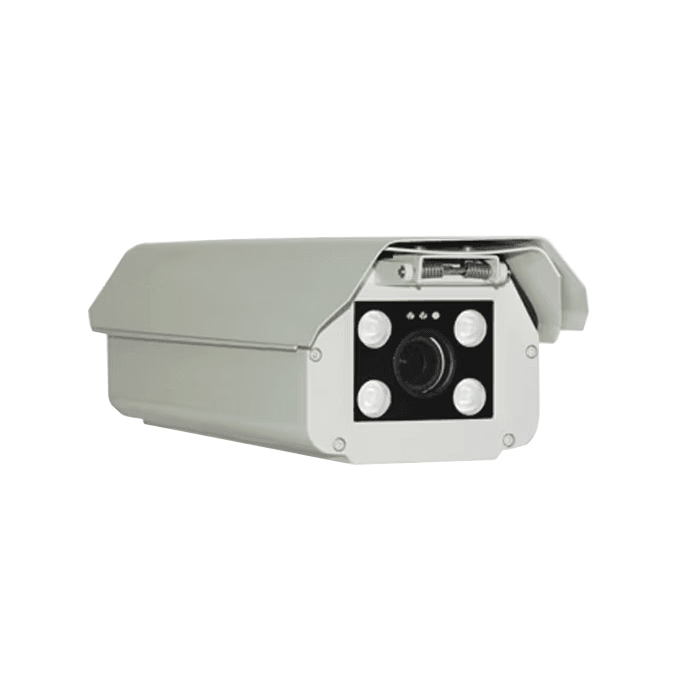
ANPR or LPR Camera
Modern security and parking management are rapidly shifting from manual checks to automated, data-driven control. In busy facilities, shopping malls, residential complexes, corporate offices, factories, hospitals, airports, and government premises vehicles enter and exit continuously. Manually recording plate numbers, checking permissions, or tracking suspicious vehicles becomes slow, error-prone, and expensive. That is why ANPR or LPR Camera systems have become one of the most valuable technologies for vehicle security and smart access control.
An ANPR (Automatic Number Plate Recognition) camera also known as an LPR (License Plate Recognition) camera is a specialized camera system that captures a vehicle’s license plate and automatically converts the plate image into readable text using intelligent recognition software. Once the plate number is recognized, the system can instantly match it with an authorized list, log it for reports, trigger alarms, open boom barriers or share real-time alerts with security teams.
Unlike normal CCTV cameras, ANPR/LPR cameras are designed specifically for plate capture in real-world conditions: high speed, glare, low light, night-time headlights, rain, dust, and different viewing angles. With the right setup an ANPR camera can read plates reliably and produce structured records: plate number, time, location, lane, vehicle snapshot, and sometimes direction of travel.
What is ANPR or LPR Camera?
An ANPR or LPR Camera is a camera system that:
- Captures license plate images of vehicles, and
- Uses recognition technology to extract the plate number as text, automatically.
ANPR = “Automatic Number Plate Recognition”
LPR = “License Plate Recognition”
In practice, both terms are used for the same solution.
What an ANPR/LPR camera typically provides:
- Plate number (text output)
- Time and date of capture
- Camera location / lane
- Vehicle snapshot and plate close-up image
- Searchable logs and reports
- Real-time alerts for watchlists (optional)
- Integration triggers (open gate, notify security, etc.)
In simple words: it’s a smart camera that identifies vehicles by reading their number plates automatically.
How ANPR/LPR Technology Works
A typical ANPR workflow includes:
1) Plate Detection
The camera finds the license plate area within the video frame.
2) Image Enhancement
It improves the plate image quality using:
- IR illumination
- Shutter speed control
- Noise reduction
- Glare handling
3) Character Recognition (OCR)
The system converts plate characters into text numbers and letters.
4) Data Matching & Actions
The recognized plate can be:
- Compared with an authorized database (whitelist)
- Checked against suspicious vehicles (blacklist)
- Logged into parking software
- Used to open a boom barrier automatically
- Used to generate real-time alerts to guards/operators
Where ANPR/LPR Cameras are Used
ANPR/LPR is ideal anywhere vehicles must be monitored or controlled:
- Parking entry/exit in shopping malls and commercial buildings
- Residential gate automation (hands-free resident access)
- Corporate offices and business parks
- Factories and industrial sites
- Hospitals and emergency vehicle priority control
- Airports, terminals, and transport hubs
- Toll roads and highway monitoring
- City surveillance and law enforcement use-cases
- Vehicle theft prevention and investigation
- Fuel stations and logistics yards
- Campus vehicle management (universities, schools)
Key Benefits of ANPR/LPR Cameras
1) Hands-Free Vehicle Access Control
Vehicles can enter without cards, tags or tickets plate recognition triggers gate opening automatically.
2) Stronger Security
You can enforce authorized entry and detect unauthorized vehicles instantly.
3) Faster Traffic Flow
Reduced vehicle stop time means shorter queues at entry/exit points.
4) Automated Logs and Reports
Every vehicle movement is stored useful for audits, investigations, and operations.
5) Blacklist/Whitelist Alerts
Instant notification when a flagged vehicle appears.
6) Reduced Manpower Costs
Less manual checking and logging, while maintaining higher accuracy and discipline.
ANPR/LPR Camera vs Normal CCTV Camera
A normal CCTV camera records video.
An ANPR/LPR camera is designed to capture readable plates and provide searchable plate data.
ANPR cameras typically include:
- Optimized lens and focus for plate distance
- High shutter speed for moving vehicles
- Strong IR illumination for night plates
- WDR for glare and headlights
- Built-in analytics or supported software integration
If your goal is to “identify vehicles reliably,” ANPR/LPR is the correct tool, normal CCTV is not enough.
Important Features to Look For in an ANPR/LPR Camera
1) High Recognition Accuracy
Accuracy depends on sensor quality, lens, and software. A quality solution aims for high correct-read performance in real conditions.
2) Night Vision with IR (Infrared) Support
Plate reading at night requires IR illumination and proper tuning to reduce headlight glare.
3) WDR (Wide Dynamic Range)
WDR helps manage:
- Bright sunlight
- Reflections
- Headlights at night
- Shadow-heavy entrances
4) Fast Shutter & Motion Handling
For moving vehicles, the camera must freeze motion and avoid blur.
5) Resolution and Frame Rate
Higher resolution helps capture plate details, especially when vehicles are farther away.
6) Supported Plate Formats
Your system should support local plate formats and fonts.
7) Data Output & Integration Options
Look for compatibility with:
- Access control systems
- Boom barriers
- Parking ticketing systems
- VMS signage
- CCTV NVR/VMS software
- APIs/SDK (for custom integration)
8) On-Board Storage / Edge Processing
Some cameras process recognition in-camera; others rely on server software.
9) Outdoor Protection
For outdoor gates, choose:
- Weatherproof body
- Stable mounting
- Surge protection if possible
ANPR/LPR System Components
An effective ANPR solution usually includes:
- ANPR/LPR Camera
- Recognition software (built-in or server-based)
- Database module (whitelist/blacklist, residents, staff, visitors)
- Control integration (boom barrier / gate / relay output)
- Monitoring dashboard (live view + logs + reports)
- Network and power setup (PoE switch or power adapter)
- Optional devices
- Loop detector (trigger capture)
- Barrier gate
- Intercom
- LED signage
- Parking payment system
Typical Use Cases
Parking Automation (Ticketless Parking)
- Plate is captured at entry
- System logs entry time
- At exit, plate is captured again
- Fee is calculated automatically (no paper ticket needed)
Residential Gated Community
- Residents’ plates stored in whitelist
- Gate opens automatically for known plates
- Visitors can be managed by temporary permissions
Corporate Facility Security
- Staff vehicles allowed
- Unknown vehicles flagged
- Logs help manage attendance and audits
Blacklist Alerts
- Plate matches watchlist
- Security receives instant alert with image + time + location
Installation Best Practices for High Accuracy
A strong ANPR camera can still fail if installation is poor. For best results:
- Mount at correct height and angle (avoid extreme tilt)
- Use dedicated lane capture (not too wide)
- Ensure stable lighting and avoid direct headlight glare
- Define proper capture distance (lens selection matters)
- Use a trigger (loop sensor or virtual line) for perfect timing
- Keep camera clean (dust and rain spots reduce accuracy)
- Maintain clear lane markings to guide vehicles in the capture zone
How to Choose the Right ANPR/LPR Camera
Before buying, confirm:
- Use case
- Access control? Parking billing? Security watchlist?
- Vehicle speed
- Slow gate entry vs faster road capture
- Lighting conditions
- Indoor basement, outdoor sunlight, night headlights
- Integration requirements
- Boom barrier, parking software, access control, API/SDK
- Storage and reporting needs
- Local storage vs server-based, report formats, retention period
- Support and maintenance
- Calibration, software updates, spare parts, warranty
Final Thought
An ANPR or LPR Camera is one of the smartest upgrades for modern vehicle security and parking management. It automates plate capture, reduces manual work, improves access control, speeds up vehicle flow, and delivers reliable logs for reporting and investigation. With proper installation and integration, ANPR/LPR systems can enable hands-free entry, ticketless parking, blacklist alerts, and stronger perimeter security—making them ideal for commercial, residential, industrial, and public facilities.
If your facility needs a secure and efficient way to identify and control vehicles, investing in an ANPR/LPR camera system is a future-ready decision that improves both security and operations.