

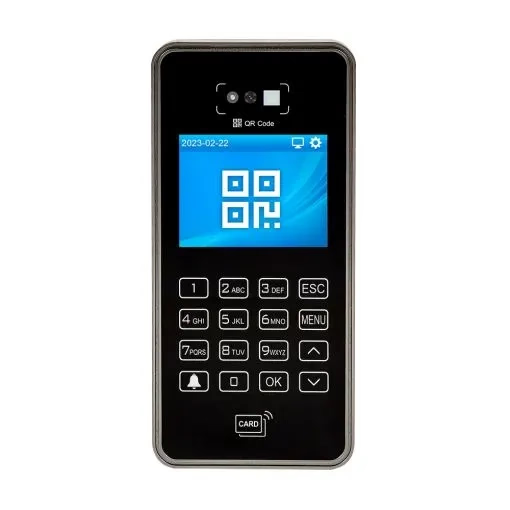
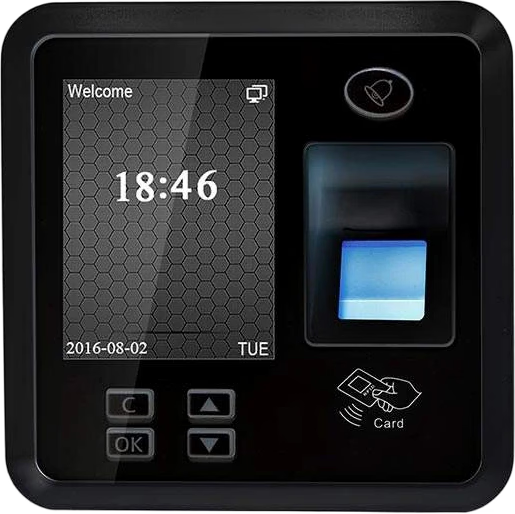
RFID Reader Access Control – Smart Entry System
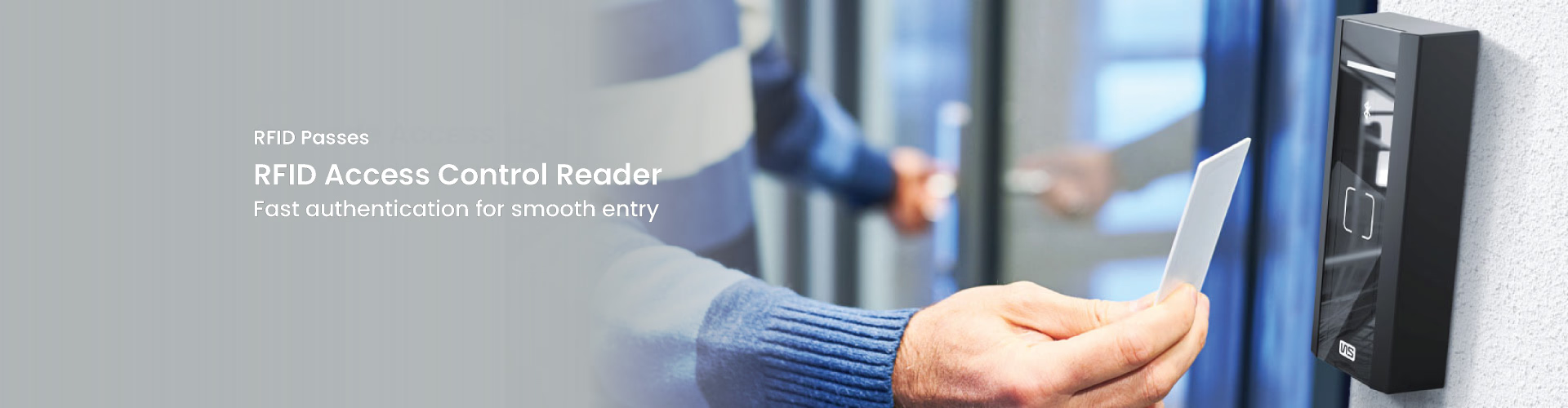
A modern facility needs access control that is fast, reliable, and easy to manage—without slowing down daily operations. RFID Reader Access Control is one of the most widely used entry technologies because it offers quick authentication with simple user experience: present a card or tag, verify identity, and unlock entry within seconds.
VARITO RFID access control systems are designed for professional sites that require controlled entry for staff, residents, students, visitors, and contractors. Whether you manage a corporate office, industrial facility, educational campus, hospital, or a mixed-use building, RFID readers provide a scalable foundation for smart access management.
What is RFID Reader Access Control?
RFID (Radio Frequency Identification) access control is a system that uses RFID readers to verify an authorized credential—such as an RFID card, key fob, wristband, or tag. When the credential is brought close to the reader, it transmits data wirelessly. The access system checks that credential against authorized records and then grants or denies access.
A typical RFID access control setup includes:
- RFID reader (at the door or gate)
- Credentials (RFID cards, key fobs, tags)
- Controller/panel (decision-making unit)
- Door lock or gate interface (maglock, electric strike, barrier)
- Optional software for user management and reporting
RFID is popular because it is simple to use, cost-effective, and reliable for both small and large deployments.
How RFID Access Control Works
-
Credential Presentation
A user taps or brings an RFID card/fob near the reader. -
Credential Reading
The RFID reader captures the credential ID. -
Access Decision
The controller verifies whether the credential is authorized for this door/zone and within the allowed time schedule. -
Unlock / Open Signal
If approved, the lock releases or the gate/turnstile opens. -
Event Logging
Each attempt can be logged with time, location, and result (granted/denied).
This workflow supports both security and smooth entry flow—especially during peak times.
Why RFID Reader Access Control?
Even with newer biometric technologies, RFID remains one of the most trusted and widely deployed access methods because it provides the right balance of convenience and control.
1) Fast Entry for High-Traffic Areas
RFID access is very quick. It reduces queues at office entrances, factory gates, and campus entry points.
2) Easy Credential Management
Cards and fobs can be issued, replaced, and revoked quickly. If a card is lost, it can be blocked without changing the door hardware.
3) Works Across Many Environments
RFID readers perform reliably indoors and can be used in controlled outdoor entrances when properly installed.
4) Scalable for Multi-Door and Multi-Site Systems
RFID is suitable for:
- single door access
- multi-door buildings
- multi-branch organizations with centralized management
5) Compatible with Other Security Layers
RFID readers can be combined with:
- PIN codes (card + PIN)
- QR code passes (visitor flow)
- biometrics (fingerprint/face)
- turnstiles, barriers, and visitor management software
Common Applications of RFID Reader Access Control
VARITO RFID reader systems are used in many settings:
- Corporate offices & commercial buildings
- Factories & industrial sites (staff entry and shift discipline)
- Warehouses & logistics hubs
- Hospitals & clinics (restricted zones)
- Universities & campuses (student and staff access)
- Residential buildings (lobby, elevator, amenities access)
- Government facilities (department-based access control)
- Gyms, clubs, and membership-based venues
- Parking and barrier control (RFID tags for vehicles)
RFID Credential Types: Cards, Fobs, Tags & More
RFID access control can support different credential formats, depending on your environment:
- RFID cards (standard staff ID format)
- Key fobs (compact and durable)
- Wristbands (venues, gyms, events)
- Sticker tags (equipment tracking, controlled access points)
- Vehicle RFID tags (parking and boom barrier entry)
This flexibility makes RFID ideal for mixed user groups and multiple access needs.
Key Features of RFID Reader
When selecting an RFID access solution for a product category page, focus on practical features that customers care about:
1) Reader Compatibility (EM / MIFARE etc.)
Many organizations use common credential types like EM or MIFARE. Ensure the reader supports the credential standard your site requires.
2) Durable Housing & Outdoor Readiness
For entrances exposed to dust, humidity, or high daily use, build quality matters. Strong enclosures and stable electronics increase long-term reliability.
3) Fast Response Time
A professional RFID system should verify quickly and consistently to prevent entry bottlenecks.
4) Anti-Passback and Access Rules
Advanced setups can enforce access policies such as:
- anti-passback (prevent repeated misuse)
- schedule control
- zone-based permissions
- restricted time windows
5) Event Logs and Reporting
Access logs help with:
- security auditing
- incident reviews
- staff attendance patterns (when integrated)
- compliance documentation
6) Integration with Locks, Doors and Gates
A strong RFID access control system should integrate easily with:
- electric strikes and magnetic locks
- door sensors and exit buttons
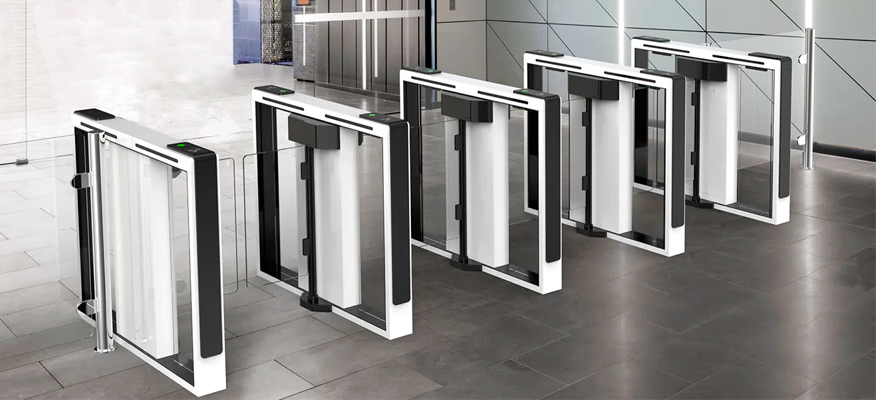
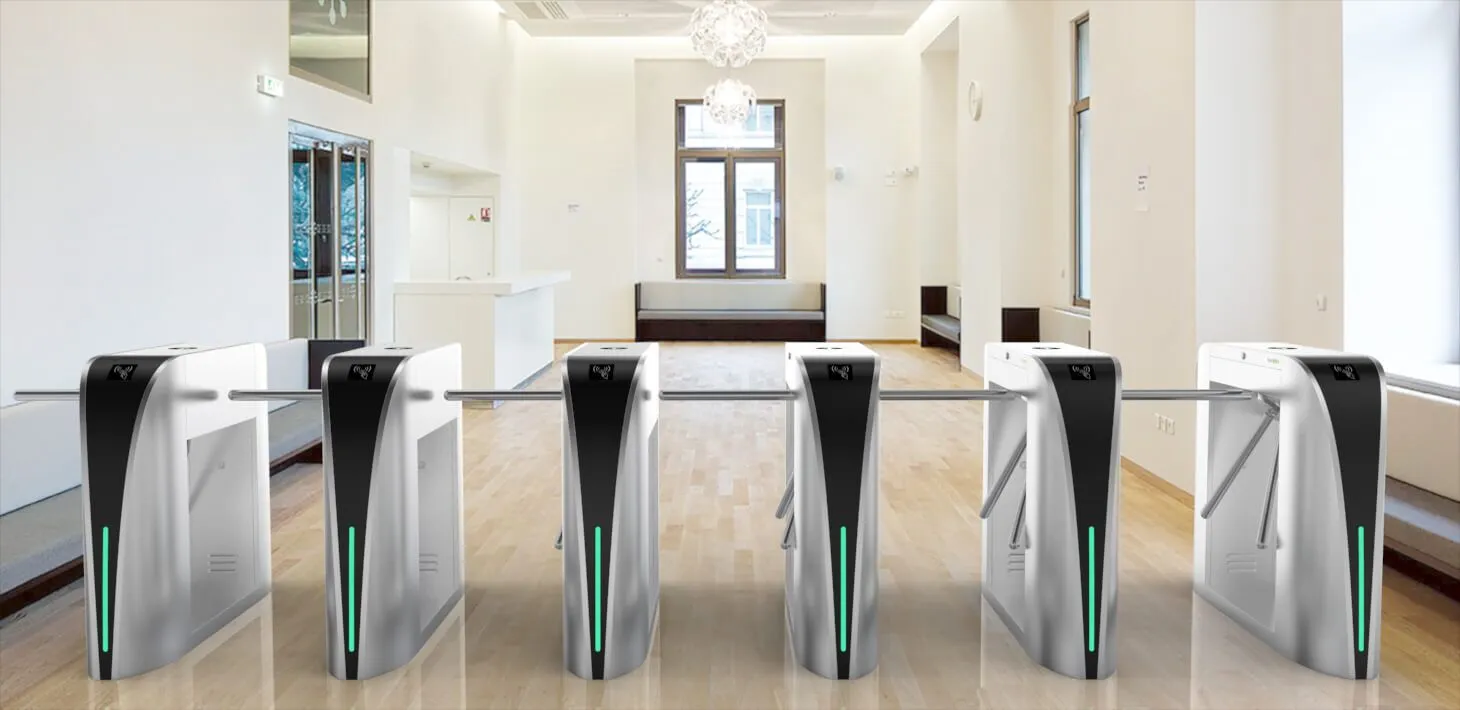
- turnstiles (tripod, flap barriers)
- boom barriers and parking control
RFID Reader Access Control vs Other Technologies
RFID vs QR Code Access
- RFID is best for daily staff/resident access because it is fast and always available without needing a phone.
- QR is excellent for visitors and temporary passes because QR codes can expire automatically and be issued instantly.
RFID vs Fingerprint Access
- RFID is quick and simple but credentials can be shared.
- Fingerprint verifies identity and reduces credential sharing, ideal for attendance-focused environments.
RFID vs Face Recognition
- RFID is reliable and cost-effective.
- Face recognition offers touchless convenience and stronger identity control, often used for premium entry points.
Many facilities choose a hybrid approach: RFID for employees, QR for visitors, and biometrics for sensitive zones.
Best Practices for Deploying RFID Access Control
To ensure professional performance, consider these best practices:
Plan Door Zones and Access Levels
Define which doors are public, staff-only, or restricted. Assign access permissions accordingly.
Use Time Schedules
Set access windows by department or user group (e.g., business hours, night shift, weekends).
Create a Card Issuance Policy
A clear issuance policy reduces misuse. Lost cards should be revoked quickly and replaced properly.
Consider Two-Factor for High Security Doors
For sensitive areas, use card + PIN or card + biometric for stronger protection.
Maintain Logs and Monitoring
Use event logs to monitor unusual patterns and support audits.
Why Choose VARITO RFID Reader Access Control?
VARITO solutions are built for practical security environments where daily reliability is essential:
- Fast RFID authentication for smooth entry flow
- Support for common credential standards
- Scalable for multiple doors and sites
- Integration-ready with doors, turnstiles, and barrier systems
- Strong access rules and event reporting potential
- Professional-grade design suitable for modern facilities
Final Thoughts
RFID Reader Access Control remains one of the most proven and widely adopted access technologies because it delivers the right combination of speed, simplicity, and control. It supports secure daily entry for employees, residents, and authorized users while offering flexible administration, easy credential replacement, and scalable growth for multi-door deployments.
When RFID access is paired with clear access rules, time schedules, proper credential management, and integration with doors or turnstiles, it becomes a dependable foundation for a complete smart entry ecosystem. For organizations seeking reliable access control that works every day without friction, VARITO RFID Reader Access Control is a practical and future-ready choice.
FAQs – RFID Reader Access Control
1) What is RFID reader access control?
It is an access system that grants entry when an authorized RFID card, fob, or tag is scanned at a reader.
2) Can RFID access control be used with doors and turnstiles?
Yes. RFID readers can control electric locks, gates, tripod turnstiles, flap barriers, and other entry systems through compatible controllers.
3) What happens if an RFID card is lost?
The credential can be deactivated in the system, preventing misuse. A replacement card can be issued without changing the door hardware.
4) Is RFID secure enough for professional facilities?
Yes, especially when combined with access rules, logs, anti-passback features, and optional two-factor methods for sensitive areas.
5) Can RFID integrate with other access methods?
Yes. RFID can be combined with PIN, QR code passes for visitors, or biometrics such as fingerprint and face recognition.
Key Applications of Milesight's People Sensing Sensors
Retail (Mall / Store / Supermarket)
Bi-directional footfall counting, dwell time detection, heat map analysis এবং customer behavior optimization।