Security is a top priority in airports, government buildings, and high-risk facilities worldwide. One of the most critical tools for ensuring safety is the X-ray baggage scanner, a device that allows security personnel to inspect luggage without physical searches. But what is an X-ray baggage scanner, and how does it work?
What Is an X-Ray Baggage Scanner?
An X-ray baggage scanner is a security device that uses X-ray radiation to generate images of the contents inside luggage, bags, or parcels. These scanners help detect prohibited items such as weapons, explosives, drugs, and other contraband without physical inspection.
How Does an X-Ray Baggage Scanner Work?
- X-Ray Emission – The scanner emits low-dose X-rays through the baggage.
- Absorption & Detection – Different materials absorb X-rays at varying levels. Dense objects (metals, weapons) appear darker, while organic materials (clothing, plastics) appear lighter.
- Image Processing – The scanner processes the data and displays a high-resolution image on a monitor for security personnel to analyze.
Threat Identification – Advanced scanners use AI and automated threat detection (ATR) to flag suspicious items.
The Evolution of Baggage Screening
Early methods relied heavily on manual inspection, which was time-consuming and error-prone. However, with technological advancements, today’s scanners provide real-time imaging and automated threat detection, making them a cornerstone of modern security protocols.
Key Functionality and Benefits of X-Ray Luggage Scanners
1. Enhanced Security & Threat Detection
X-ray scanners provide real-time imaging, allowing security teams to identify dangerous items quickly. They are essential in airports, metro stations, and government buildings to prevent smuggling and terrorism.
2. Non-Invasive Inspection
Unlike manual checks, X-ray scanners eliminate the need for physical searches, ensuring passenger privacy while maintaining security.
3. High-Speed Screening
Modern scanners process hundreds of bags per hour, reducing waiting times in high-traffic areas like airports.
4. Detection of Multiple Threat Types
- Metallic objects (guns, knives)
- Explosives & chemicals
- Drugs & contraband
- Organic materials (food, liquids)
5. AI & Machine Learning Integration
The latest X-ray baggage scanners in Germany 2025 incorporate AI-driven algorithms to improve detection accuracy and reduce false alarms.
6. Cost-Effective & Reliable
Investing in an X-ray scanner reduces long-term security costs by minimizing manual labor and improving efficiency.
Latest Trends: X-Ray Baggage Scanner in Germany 2025
Germany remains a leader in security technology, with 2025 bringing major advancements:
1. AI-Powered Automated Threat Recognition (ATR)
New scanners use deep learning to identify threats with 95%+ accuracy, reducing human error.
2. 3D Imaging & CT Scanners
Advanced Computed Tomography (CT) scanners provide 3D views of baggage, improving detection of hidden threats.
3. Enhanced Material Discrimination
New systems can differentiate between liquids, gels, and powders, crucial for airport security.
4. IoT & Cloud-Based Monitoring
Scanners now integrate with centralized security networks, allowing real-time data sharing between facilities.
5. Eco-Friendly & Low Radiation Designs
Germany’s 2025 models focus on reducing radiation exposure while maintaining high detection rates.
Key Components of an X-Ray Baggage Inspection System
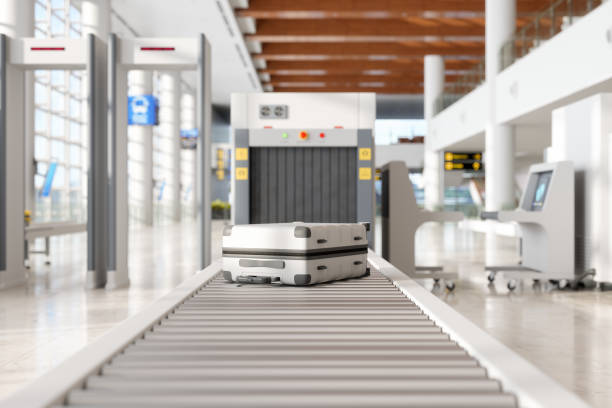
- X-Ray Generator – Emits the X-rays required for scanning.
- Conveyor System – Transports luggage through the scanner.
- Detector Arrays – Captures X-rays after they pass through the bag.
- Image Processing System – Converts raw data into readable images.
User Interface – Allows operators to analyze and respond to threats.
How X-Ray Baggage Scanners Work
- The item is placed on a conveyor belt.
- The scanner emits X-rays as the bag passes through.
- Different materials absorb X-rays at different levels.
- The detector captures the residual radiation.
- The system processes and displays images for the operator.
Safety Standards and Radiation Compliance
Modern scanners are designed with radiation shielding to protect both operators and the public. Most machines comply with international safety standards like:
- IAEA Safety Guide
- US FDA Guidelines
- Bangladesh Radiation Control Board Regulations
Choosing the Right Supplier in Bangladesh
To ensure seamless installation and long-term support, choose suppliers who offer:
- In-house technical teams
- Customizable scanner models
- Training for operators
AMC (Annual Maintenance Contracts)
Installation Process of X-Ray Scanners
- Site Assessment – Survey of power supply, layout, and space.
- Installation – Physical setup of machines and electrical wiring.
- System Calibration – Tuning the equipment for optimal results.
Training – Hands-on training for system operators.
Maintenance and Calibration Essentials
Regular upkeep is key to consistent performance:
- Monthly cleaning
- Quarterly calibration
- Software updates
- Emergency repair service
Advanced Features in Modern Scanners
- AI Threat Detection
- Remote Diagnostics
- Color Imaging Filters
- Voice Alerts
- Smart Interface Dashboards
These features not only improve accuracy but also enhance usability for operators.
Benefits for National and Commercial Security
- Prevents smuggling and terrorism
- Improves efficiency at security points
- Reduces manpower requirement
- Boosts public confidence in safety infrastructure
Regulatory and Legal Framework in Bangladesh
Agencies like:
- Bangladesh Civil Aviation Authority
- Ministry of Home Affairs
- Department of Explosives
oversee the import, installation, and use of scanner systems. Regular audits and licenses are mandatory.
Future of X-Ray Baggage Scanners
By 2030, expect features like:
- Robotic integration for unattended scanning
- Cloud AI learning for adaptive threat response
- Augmented reality overlays for operator training
FAQs about X-Ray Baggage Scanners
1. What is an X-Ray Baggage Scanner?
A security device using X-rays to detect threats in luggage without opening them.
2. What are the Functionality and Benefits of X-Ray Luggage Scanner?
It offers real-time imaging, automated threat detection, and faster processing.
3. Are scanners safe for humans?
Yes, modern systems meet strict radiation safety standards.
4. How long does installation take?
Generally 1–2 days for setup and calibration.
5. Is training required to operate?
Absolutely, certified operators ensure proper usage.6. What’s the lifespan of a scanner?
Usually 5–10 years with regular maintenance.
Conclusion: The Role of Scanners in Future-Proof Security
In 2025 and beyond, X-ray baggage scanners are not just tools—they’re critical infrastructure. For countries like Bangladesh aiming to secure public and private spaces effectively, these scanners offer a trusted and scalable solution. From airports to embassies, their importance will only grow as threats evolve and technologies advance.